3D Trademarks vs. Series Marks: Key
Differences and Brand Protection Strategies
By Zahraa
Zoughaib, in collaboration with Bahia Alyafi.
Introduction: The Role of 3D
Trademarks and Series Trademarks in Intellectual Property Protection
Trademarks play a crucial role in
protecting brand identity, ensuring that consumers can easily distinguish one
company's products or services from another. While traditional trademarks often
consist of words, logos, or symbols, there are other specialized forms of
trademark protection that cater to unique branding elements. 3D
trademarks, safeguard distinctive product shapes or packaging, and series
trademarks, which allow businesses to register multiple variations of a
mark under a single application. Understanding the differences between 3D
trademarks and Series Trademarks is essential for businesses looking to protect
their intellectual property effectively. This article explores what 3D
trademarks and series trademarks protect, their benefits, registration
processes, and how they help brands maintain exclusivity and positioning in the
market. We will first start with defining Series trademarks:
What are series Trademarks?
A series
trademark involves multiple trademarks that are similar but differ only in
minor, non-distinctive elements that do not significantly alter the core
identity of the trademark. These marks are not only nearly identical, but they
are also registered in the same jurisdiction, owned by the same entity, and
cover the same range of products and services. In countries where series
trademarks are allowed, a single registration can cover multiple variations of
the same brand, granting protection to each version with only one registration
number.
Because series trademarks include
more than one mark, they are subject to extra requirements compared to standard
trademarks. Various trademark offices have shared guidelines and illustrative
examples on what makes a series of trademarks acceptable. The main takeaway is
that changes applied to each mark in the series must not alter its core
identity. If a variation changes the mark’s identity in terms of appearance,
sound, or meaning, the entire series may be rejected. Below is a summary of
these criteria along with examples.
|
Acceptance Criteria
|
Acceptable Example
and Reasoning
|
Unacceptable
Example and Reasoning
|
|
Upper vs. lower
case letters
|
HEARTACHE
heartache
Changing letter case doesn’t alter identity.
|
MYSTORE
MyStore
Mystore
MystOre
The last version (“MystOre”) creates a new meaning,
“Myst” + “Ore,” disrupting consistency.
|
|
Combined or
separated words
|
BLACK POINT
BLACKPOINT
Visual difference doesn’t change pronunciation.
|
CATSCAN
CAT SCAN
“CAT SCAN” could be read as “CATS CAN,” changing
meaning.
|
|
Plural vs. singular
|
GRAZE
GRAZES
One is the plural of the other.
|
CHARLE
CHARLES
“CHARLES” is not the plural of “CHARLE.”
|
|
Punctuation
differences
|
UKNY
U.K.NY
Punctuation doesn’t change the mark’s identity.
|
ESCAPE / E'SCAPE
Apostrophe affects pronunciation and interpretation.
|
|
Minor spelling
differences
|
CENTRE-FUGUE
CENTER-FUGUE “Centre” and
“Center” are acceptable variations.
|
MYXCHANGER
MY EXCHANGER
Second version has a completely different meaning.
|
|
Different linking
words
|
FUN & RELAX
FUN AND RELAX
Both convey the same meaning.
|
SAVE FOR COUPONS
SAVE 4 COUPONS
The meanings differ due to the change in expression.
|
|
Device elements in
word marks
|

Trafwicbook
Border doesn’t change identity.
|
WEBWORKS

Symbols significantly alter the mark.
|
|
Positioning of
visual elements
|


Position doesn’t affect identity.
|

Element placement significantly changes appearance.
|
|
Color differences
(not the key identity)
|

Color change doesn’t alter identity.
|

Colors suggest different brand interpretations.
|
|
Color is the main
identity
|

Acceptable when color isn’t key.
|
If color defines the design, it changes the
identity.
|
Why Are Series Trademarks Useful?
Standard trademarks need to be
registered exactly as they will be used. Therefore, when one uses a trademark
in different ways with minimal changes, these variations are not directly
protected. In countries where series trademarks are not an option, you would
need to register each variation separately, which can be very expensive.
In countries where series trademark
registration is available, a single registration may cover all variations,
saving significant costs. This means that multiple trademark variants can be
registered as a single application, granting protection to each version by only
paying for one registration.
However, it is important to note that series trademark
registration is not available in all countries.
Series trademarks can be registered
in several jurisdictions, including but not limited to Australia, Bangladesh,
Hong Kong, India, Ireland, Malaysia, New Zealand, Pakistan, Singapore, and the
United Kingdom.
In such countries, the criteria for
what constitutes an acceptable series can vary significantly.
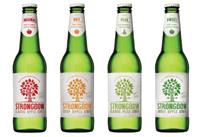
Figure
1:
Series TMs with Different Combinations

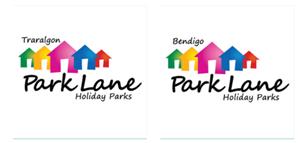
Figure 2: Series TMs in
Different Colors
Figure 3: Series TMs
with Different Locations
How Do You Know When You Can Register
a Series Trademark?
Not all countries have the option of
registering series trademarks, and the rules differ from one jurisdiction to
another. To determine if your trademarks can be registered as a series, it is
essential to contact a local expert. Below is a list of some of the
jurisdictions which have series trademarks and a small comparison of criteria
used according to local practices:
Series
marks in the Middle East:
Algeria – Series marks: In Algeria,
series trademarks may be registered if the variations between marks are limited
to:
- Non-distinctive
changes (e.g., minor design tweaks, color variations).
- Small differences in descriptive
elements (e.g., product numbers, model names).
- Nearly identical
representations, where the overall commercial impression remains
unchanged.
|
Trademark
|
Filing number
|
Class
|
Filing date
|
|

|
DZ/T/2010/000917
|
12
|
29-March-2010
|
Bahrain – Series marks: In Bahrain,
series trademarks are accepted when the differences involve:
- Minor modifications (e.g.,
color, typography, or non-distinctive graphical elements).
- Adjustments in goods/services
descriptions without altering the mark’s core identity.
- Similar visual, phonetic, or
conceptual impressions across all marks in the series.
Egypt – Series marks: In Egypt, a
series of trademarks may be registered if:
- Variations are
non-essential (e.g., size, color, or minor textual differences).
- The core distinctive elements
remain identical across all marks.
- Changes do not affect the
trademark’s overall recognition or distinctiveness.
|
Trademark
|
Filing number
|
Class
|
Filing date
|
Applicant
|
|

|
525459
|
9
|
16-November-2023
|
Zain Group
|
Jordan - Series marks: In Jordan,
series trademarks are permitted when:
- Differences are minimal and
non-distinctive (e.g., slight design changes, color shifts).
- The marks share the same
dominant elements in appearance, sound, and meaning.
- Variations do not create
consumer confusion or alter the mark’s identity.
|
Trademark
|
Filing number
|
Class
|
Filing date
|
Applicant
|
|

|
80544
|
25
|
19 June 2005
|
You
Gov plc
|
Kuwait - Series marks: In Kuwait,
series trademarks are accepted when the differences between marks involve:
- Insignificant variations in
design, color, or non-distinctive elements.
- Small adjustments in text
(e.g., product numbers, model names) without changing the mark’s core
identity.
- Similar
representations where the marks look, sound, and convey the same
commercial impression.
Lebanon - Series marks: In Lebanon,
series trademarks must meet the following criteria:
- Nearly identical
representations with only minor deviations (e.g., color, font).
- Non-substantive changes in
descriptive text (e.g., product codes, disclaimers).
- No material alteration to the
mark’s distinctive character.
Morocco - Series marks: In Morocco,
series trademarks are accepted if:
- Variations are
insignificant (e.g., color, minor graphical adjustments).
- The essential features of the
mark remain consistent across all versions.
- Changes do not affect the mark’s
ability to function as a single brand identifier.
|
Trademark
|
Filing number
|
Class
|
Filing date
|
|
|
218732
|
38
|
17-Sep-20
|
Oman - Series marks: In Oman, series
trademarks may be registered when:
- Differences are limited to
non-distinctive elements (e.g., labels, numbers, or colors).
- The marks are substantially the
same in appearance, sound, and meaning.
- Variations do not mislead
consumers or dilute the mark’s distinctiveness.
Qatar - Series marks: In Qatar,
series trademarks may be registered if the variations between marks are limited
to:
- Non-distinctive
changes that do not alter the overall identity of the trademark.
- Minor modifications in
color, size, or descriptive elements (e.g., numbers, product names).
- Nearly identical
representations, where differences do not affect the trademark’s essential
character.
|
TM
|
Registration number
|
Class
|
Registration date
|
|

|
QA/T/1/141423
|
32
|
16 Aug 2021
|
Saudi Arabia - Series marks: In Saudi
Arabia, series trademarks are permitted if the variations between marks are
limited to:
·
Non-distinctive elements that do not significantly alter the trademark’s
identity.
·
Minor differences in goods or services listed in the trademark.
·
Changes in color, provided the overall impression remains the same.

Product protected:
|
Trademark
|
Registration number
|
Class
|
Filing date
|
Applicant
|
Description
|
|
|
SA
TM-01-00-14651-24
|
9
|
22-Apr-2024
|
Chocoladefabriken
Lindt & Sprüngli AG
|
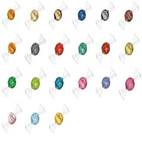
Twenty-one sequential trademarks, all
consisting of the words Lindt and Lindor written in distinctive Latin letters
separated by a horizontal line and a distinctive dragon next to the word
Lindt on a distinctive circular motif wrapped in a white leaf pattern, all in
white, black, tan, brown, dark tan, silver, gray, gold, yellow, light pink,
pink, dark pink, light blue, blue, dark blue, red, dark red, orange, mint
green, light green, dark green, purple. Show less...
|
Tunisia - Series trademarks : In
Tunisia, a series of trademarks may be registered if the variations involve:
- Insignificant modifications that
do not affect the distinctive character of the mark.
- Changes limited to aspects such
as color, size, or minor graphical elements.
- Identical or nearly identical
representations with only non-distinctive alterations.
United Arab Emirates - Series marks:
In the UAE, series trademarks are accepted when the differences between marks
are restricted to:
- Non-material variations that do
not change the overall impression of the trademark.
- Adjustments in color, minor
design elements, or descriptive text.
- Identical or highly similar
representations with negligible differences.
|
Trademark
|
Filing number
|
Class
|
Filing date
|
|

|
373501
|
35
|
29-Mar-2022
|
Yemen - Series marks: In Yemen, a
series of trademarks may be registered if the variations consist of:
- Minor differences that do not
affect the distinctive character of the mark.
- Changes in color, typography, or
non-essential graphical elements.
- Nearly identical representations
with only slight modifications.
Series
marks in other International countries and Jurisdictions:
Australia - Series marks: In Australia, the differences between versions in a
series should be limited to:
- Changes in the goods
or services mentioned in the trademark.
- Modifications to the
number, price, quality, or names of places.
- Color changes in the
trademark.
New Zealand - Series marks: In New Zealand, series trademarks are accepted when
the variations differ in:
- Goods or services
described in the trademark name.
- Number, price,
quality, or names of places.
- Other
non-distinctive changes that do not substantially alter the trademark's
identity.
- Color changes in the
trademark.
Singapore - Series marks: In Singapore, each version in a series mark must:
- Resemble the others
in representation.
- Have differences
that are non-distinctive and do not alter the overall identity of the
trademark.
|
TM
|
Registration number
|
Class
|
Registration date
|
|

|
40202253621H
|
9, 42
|
5 May 2023
|
United Kingdom - Series marks: In the United Kingdom, the marks in a series must:
- Look the same.
- Sound the same.
- Mean the same.
|
TM
|
Registration number
|
Class
|
Registration date
|
|

|
UK00901984079
|
16, 39, 42
|
1 Jul 2005
|
Minor differences are allowed, and a
series can consist of up to six marks in a single application. Other countries
with series trademark protection include Bangladesh, Hong Kong, India, Ireland,
Malaysia, & Pakistan.
On the other hand, there are some countries which do not officially
recognize series trademarks such as the United States.
Comparison of Protection Criteria: 3D
Trademarks vs. Series Marks
A 3D trademark primarily protects the
shape, configuration, or packaging of a product, ensuring that consumers
associate the distinctive design with a specific brand. In contrast, a series
trademark safeguards multiple variations of a brand under a single
registration, allowing businesses to maintain flexibility while ensuring brand
consistency.
To qualify for registration, a 3D
trademark must be distinctive and non-functional, meaning it cannot serve a
purely utilitarian purpose. Series trademarks, on the other hand, must retain a
common core element across all variations, ensuring that the overall identity
of the mark remains consistent.
The Longchamp Le Pliage handbag
design is a notable case. Longchamp successfully registered the
three-dimensional shape of its folded handbag (with its characteristic
trapezoidal structure and flap) as a 3D trademark. This trademark protects the
distinctive shape and folding mechanism associated with the brand. One key
limitation of 3D trademarks is that they cannot protect purely functional
shapes, as trademark law does not permit monopolization of essential product
features. This restriction does not apply to series trademarks, which focus on
branding elements rather than product design. Additionally, a 3D trademark
protects a single, unique design, while a series trademark provides greater
flexibility by allowing multiple registered variations under one mark.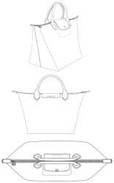
Functional elements cannot be protected under trademark law, as the primary
focus of trademarks is to protect distinctive and non-functional features that
indicate the source of goods or services. Functional elements are considered
essential product features, and granting trademark protection for them could
unfairly restrict competition by creating a monopoly on practical or
utilitarian aspects.
With 3D trademarks, there is always a
risk that elements such as the shape of a product or specific parts (e.g.,
flaps or handles) may be flagged as functional rather than ornamental.
Trademark examiners may reject such applications if they determine that the
design is primarily utilitarian and lacks distinctive branding elements.
To
mitigate this risk, it is often advisable to file trademarks in a form that
emphasizes ornamental or branding aspects. For instance, adding distinctive
features like specific colors, patterns, or placements can improve the
likelihood of registration. As a result, a filing strategy that combines 3D
designs with visual elements focused on branding, such as color placement, can
offer greater enforcement versatility while avoiding potential objections from
trademark examiners.
The registration process for a 3D
trademark often requires evidence of acquired distinctiveness, especially if
the shape is not inherently unique. Conversely, a series trademark application
must demonstrate that all variations maintain a consistent brand identity
without substantial changes.
In terms of examination, a 3D
trademark must not serve a functional purpose, whereas series trademarks are
assessed based on whether their variations significantly alter the trademark’s
identity. Despite these differences, both 3D trademarks and series trademarks
can be protected indefinitely, as long as they remain in use and continue to be
recognized as distinctive by consumers.
Examination Criteria and Registration
Process
To register a 3D trademark, the shape
must meet the criteria of distinctiveness and must be capable of identifying
the source of goods or services. The registration process typically requires
proving that the 3D shape has been used in commerce and has become associated
with a particular brand. In some jurisdictions, applicants must submit proof of
acquired distinctiveness through use to overcome objections that the shape is
generic.
For a series trademark, the
registration process requires demonstrating that all variations share a common
unifying element and that the differences do not substantially alter the
overall identity of the mark. While a single application covers multiple variations,
jurisdictions that allow series trademarks may impose specific criteria for
acceptable differences, such as minor changes in color, stylization, or
descriptive elements. Additionally, some trademark offices charge extra fees
for multiple variations within the same registration.
Despite these differences, both types
of trademarks undergo strict examination to ensure they meet the legal
requirements for distinctiveness and brand protection.
Duration of Protection
Both 3D trademarks and series
trademarks can be protected indefinitely, as long as they remain in use and
maintain their distinctiveness. However, if a 3D trademark becomes generic or
loses its ability to identify the brand, its protection may lapse. Similarly,
if a series trademark's variations no longer retain their core branding element
or are not consistently used, the registration may become vulnerable to
cancellation.
Scope of Protection: 3D Trademarks
vs. Series Marks
The scope of protection for both 3D
trademarks and series trademarks revolves around consumer recognition and
ensuring that the public is not misled about the origin of goods or services. A
3D trademark protects distinctive shapes, configurations, or packaging that
serve as brand identifiers, preventing competitors from using similar designs
that could create confusion. Series trademarks, on the other hand, safeguard
multiple variations of a brand name, logo, or design under a single
registration, ensuring consistency in branding. While both require continuous
use in commerce to maintain validity, 3D trademarks primarily focus on the
physical representation of a product, whereas series trademarks may extend to
variations involving positioning, color combinations, and branding elements.
Can a 3D Trademark also be a Series
Mark?
In rare cases, a 3D trademark could
also qualify as a series mark if multiple variations of the product shape share
a common distinguishing feature. However, most jurisdictions do not allow 3D
shapes to be registered as series marks, as series marks are typically reserved
for variations of word marks or logos, rather than product shapes.
|
Product
|
3D trademark
|
Series trademark
|
|

|
The iconic Pepsi Globe: a three-dimensional sphere
with red, white, and blue fields, represents the brand's distinctive shape
and design.
The application usually includes:
1.
A detailed
description of the 3D shape.
2.
Visual
representations (images or drawings) of the product or packaging.
3.
Evidence of
acquired distinctiveness, if applicable.
|
Variations of the logo and packaging,
such as different color schemes or modifications for specific product lines
(e.g., Pepsi Zero Sugar), ensure comprehensive protection of branding
variations.
The application typically includes:
1.
A
description of the shared core elements across the series.
2.
Visual
representations of each variation.
3.
Evidence
showing that the variations do not substantially alter the identity of the
mark.
|
Pepsi's branding demonstrates elements of both 3D and series
trademarks. The iconic Pepsi Globe—a three-dimensional sphere with red,
white, and blue fields—is an example of a 3D trademark, as it protects the
distinctive shape and design associated with the brand. Additionally, Pepsi
employs series trademarks by registering variations of its logo and packaging,
such as different color schemes or slight modifications for specific product
lines (e.g., Pepsi Zero Sugar). This combination ensures comprehensive
protection of both the physical design and branding variations, reinforcing
Pepsi's identity across markets.
How a Series Mark and a 3D Trademark
Can Overlap
A series trademark cannot directly
become a 3D trademark, as they serve distinct purposes and have different
registration requirements. However, a brand could evolve in a way that allows
for both protections to apply under different circumstances. 3D Trademark and
Series mark can overlap in three keyways:
1.
Brand Evolution Leading to 3D Trademark Registration
If a series trademark consists of
multiple variations of a logo, wordmark, or stylized brand name, and the brand
later develops a distinctive 3D product shape or packaging that becomes widely
recognized, the company may apply separately for a 3D trademark to protect that
shape.
Example: A fashion brand with a
series trademark for different stylized logos may later design a signature
handbag shape that becomes iconic and seeks 3D trademark protection for that
shape.
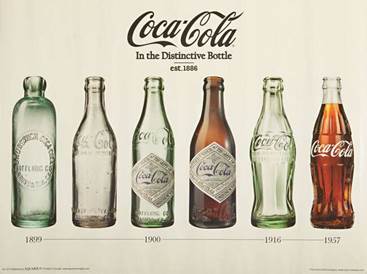
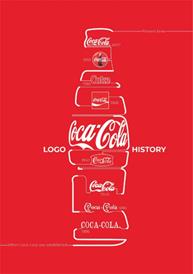
A real-world example is Coca-Cola. The brand holds a series trademark
for its iconic logos, including variations in font styles and designs. Later,
Coca-Cola successfully registered the distinctive contour shape of its glass
bottle as a 3D trademark. While the logos and the bottle shape are separate
elements, they collectively reinforce Coca-Cola's brand identity. This
demonstrates how a brand can evolve its intellectual property strategy by
protecting both stylized branding elements through a series trademark and a
unique product design through a 3D trademark.
Coca-Cola's logo evolution began in 1886 with a simple serif font,
transitioning to the iconic Spencerian script in 1887, which has remained a
hallmark. Over the years, the logo saw various transformations, including
decorative swirls (1890-1891), the Red Disc for advertising (1947-1960s), and
the fishy Arciform shape (1958-1960s). The introduction of the white wave, or
Dynamic Ribbon Device, in 1969 marked a significant shift, later enhanced with
accents and bubbles in 2003. By 2007, the design returned to a clean, classic
look, celebrating milestones like the 125th anniversary in 2011 and
incorporating the One Brand strategy in 2016.
Coca-Cola's iconic contour bottle
was first registered as a 3D trademark in the United States on April 12, 1960.
This registration protects the distinctive shape and design of the bottle,
which has become synonymous with the brand's identity.
2.
Coexistence of Series Marks and 3D Trademarks
A company may register both a series
trademark and a 3D trademark to protect different aspects of its brand.
Example: A perfume brand could have a
series trademark for different label designs while also securing a 3D trademark
for a uniquely shaped bottle associated with its products.
This image highlights the evolution of the CHANEL No. 5 perfume bottle from
1921 to 1986, showcasing its protection as both a 3D trademark and a series
mark. The rectangular body, faceted stopper, and symmetrical proportions define
its distinctive 3D trademark, while variations in labeling, typography, and
proportions across versions reflect its potential as a series mark. Together,
these elements reinforce CHANEL's brand identity through consistent yet
adaptable design.
Ferrero Rocher provides a great
real-world example of combining both series and 3D trademarks. The brand has a series
trademark for its logo and packaging designs, which include variations in
the placement of the Ferrero Rocher name, fonts, and decorative elements on its
packaging. Additionally, Ferrero Rocher has sought 3D trademark protection
for the distinctive shape and presentation of its chocolates. This includes the
spherical chocolate wrapped in gold foil, placed in a pleated brown paper cup,
and topped with a sticker bearing the Ferrero Rocher name. The 3D trademark
ensures that the unique combination of shape, packaging, and presentation is
protected, preventing competitors from imitating the iconic design. Meanwhile,
the series trademark safeguards the variations of the branding elements, such
as different logo placements or packaging styles, ensuring consistency across
product lines. Together, these trademarks strengthen Ferrero Rocher's brand
identity and provide comprehensive protection for both its physical product
design and branding elements.
3.
Branding Elements Moving Toward 3D Recognition
If a series mark consistently
features a recurring 3D shape (such as variations of a logo appearing on a
uniquely shaped product), it might eventually gain distinctiveness as a 3D
trademark if consumers start recognizing the shape itself as a brand identifier.
Example: If a company owns a series
mark for different variations of a logo printed on a uniquely curved beverage
bottle, and over time, consumers associate the bottle’s shape with the brand,
the company may apply for a 3D trademark for the bottle design.
Enforcement of Series Marks vs. 3D Trademarks
Enforcing a series trademark can be
more complex than enforcing a 3D trademark, especially when determining whether
an infringing mark is too similar to the protected variations. Since a series
mark allows multiple versions of a brand name, logo, or design under one
registration, infringement cases often revolve around whether the core
distinguishing element remains recognizable despite minor differences. For
example, McDonald's protects "McChicken," "McFlurry," and
"McMuffin" as part of its "Mc" series mark, making it
easier to challenge unauthorized uses of similar prefixes, such as
"McCoffee" or "McBurger." However, proving infringement can
become difficult if an alleged infringer argues that their variation is
sufficiently distinct.
McDonald's Corporation v. Quality
Inns International, Inc. (1988, U.S.) McDonald's sued Quality Inns over plans
to launch "McSleep," arguing it infringed upon its family of
"Mc" trademarks (e.g., "McChicken," "McNuggets,"
"McMuffin"). The court ruled in McDonald's favor, recognizing the
distinctiveness of the "Mc" prefix through extensive advertising and
concluding that "McSleep" could cause consumer confusion, setting a
strong precedent for protecting series trademarks.
McDonald's International Property Co
Ltd v. Gianni and Another (2007, South Africa) McDonald's opposed the
registration of "McCoffee" by a South African company, arguing it
infringed on its established "Mc" prefixed trademarks. The court
agreed, concluding that "McCoffee" could mislead consumers into
thinking it was associated with McDonald's. This reinforced McDonald's ability
to protect its series trademarks effectively.
In contrast, 3D trademarks typically
provide a more straightforward path to enforcement because they protect a
specific product shape or packaging. Once a 3D trademark is registered, it
serves as prima facie evidence of ownership, allowing brands to focus their
legal battles on consumer confusion rather than proving distinctiveness each
time. A well-known example is the Coca-Cola contour bottle, which has been
successfully enforced against lookalike bottle designs that could mislead
consumers.
While both series marks and 3D
trademarks offer strong brand protection, 3D trademarks tend to be easier to
enforce, as they rely on a fixed, recognizable product shape rather than
multiple branding variations. However, both types of trademarks play a crucial
role in protecting brand identity, and businesses must carefully choose the
right strategy based on their products and market positioning.
Conclusion:
The Strategic Advantage of Series Marks in Brand Evolution
Series trademarks offer businesses a
flexible and cost-effective way to protect multiple variations of a brand under
a single registration. By allowing companies to evolve their branding while
maintaining legal protection, series marks serve as a powerful tool for
long-term brand consistency and market expansion.
A prime example is Apple’s iPhone
series, where the core brand name "iPhone" remains consistent across
generations—iPhone 12, iPhone 13, iPhone 14—while still allowing for innovation
and differentiation. Similarly, McDonald's "Mc" series secures its
naming structure across products like McChicken, McFlurry, and McMuffin,
reinforcing its brand identity worldwide.
From global giants to emerging
businesses, companies that leverage series trademarks can adapt to changing
consumer trends without losing their core identity. As branding strategies
continue to evolve, series marks remain an essential asset for companies
looking to build and protect a dynamic, recognizable presence in competitive
markets.